

Strategies for Managing Executive Dysfunction
Note: This page is adapted from a talk I gave at Autscape with autism researcher / my mum Leneh Buckle. You can see the original slides on the Autscape website here.
Living with executive dysfunction leads to all kinds of inexplicable occurrences. Sometimes you seem to jump through time, unable to account for the hours that went by after you opened your phone or switched on your computer. Your stuff disappears, even when you swear you were just holding it. And occasionally stuff reappears, but in random locations that you can’t justify how they got there. Having executive dysfunction is kind of like being an untrained Wizard.
Well, welcome to Wizard training! Growing up in a house of Mages of all kinds, I have learned all kinds of strategies for managing the magical chaos that crops up constantly in our lives. Today’s lesson: Portals
- Strategies for Managing Executive Dysfunction
- What Are Portals?
- Portal Proofing: General Concepts
- Specific Strategies
- Examples
- Summary
What Are Portals?
Portals are the only rational explanation for what happens to all my stuff. I lose things while I am holding them. They turn up in a room I wasn’t even in when I lost it. I am constantly buying new socks and underwear and I still never have enough. I used to lose my school shoes and one shoe would turn up at my mum’s house and the other at my dad’s. My entire P.E. kit and/or school bag would vanish regularly. How??
Eventually I theorised of the existence of portals. I am followed by portals. They infest my house. They pop into existence to swallow up my stuff, then they promptly disappear. When they are feeling generous, they appear to deposit some stuff. But seldom is that in the location it was originally. And sometimes it’s stuff I don’t recognise? If anyone is missing some socks, let me know, I have several I cannot account for. And some spare keys I think?
I theorise that these portals form all over the world, and cause minor chaos for even Neurotypical people. But some Neurodivergent people really attract them. For me, it’s been one of the number 1 problems in my life for sure.
Having conceptualised my enemy, I could form strategies for suppressing it. And now I am here to share my accumulated wisdom with all the exhausted wizards of the world!
Portal Proofing: General Concepts
Keep everything where you can see it
Portals tend to form while you’re not paying attention. Out of sight = Out of mind = Portal zone. Opt for ways of storing things that allow you to still see them. Try to not accidentally hide things.
Make systems that are low effort, self maintaining
Organisational systems can help prevent portals. Creating dedicated places for things helps keep your space consistent, you know where everything is, so portals are less able to subtly come in and mix everything around. However, if an organisational system takes a lot of effort to maintain, you don’t actually have a system at all. You have an aspiration to be organised that has been buried under a pile of junk. I made this handy graphic to illustrate the point:
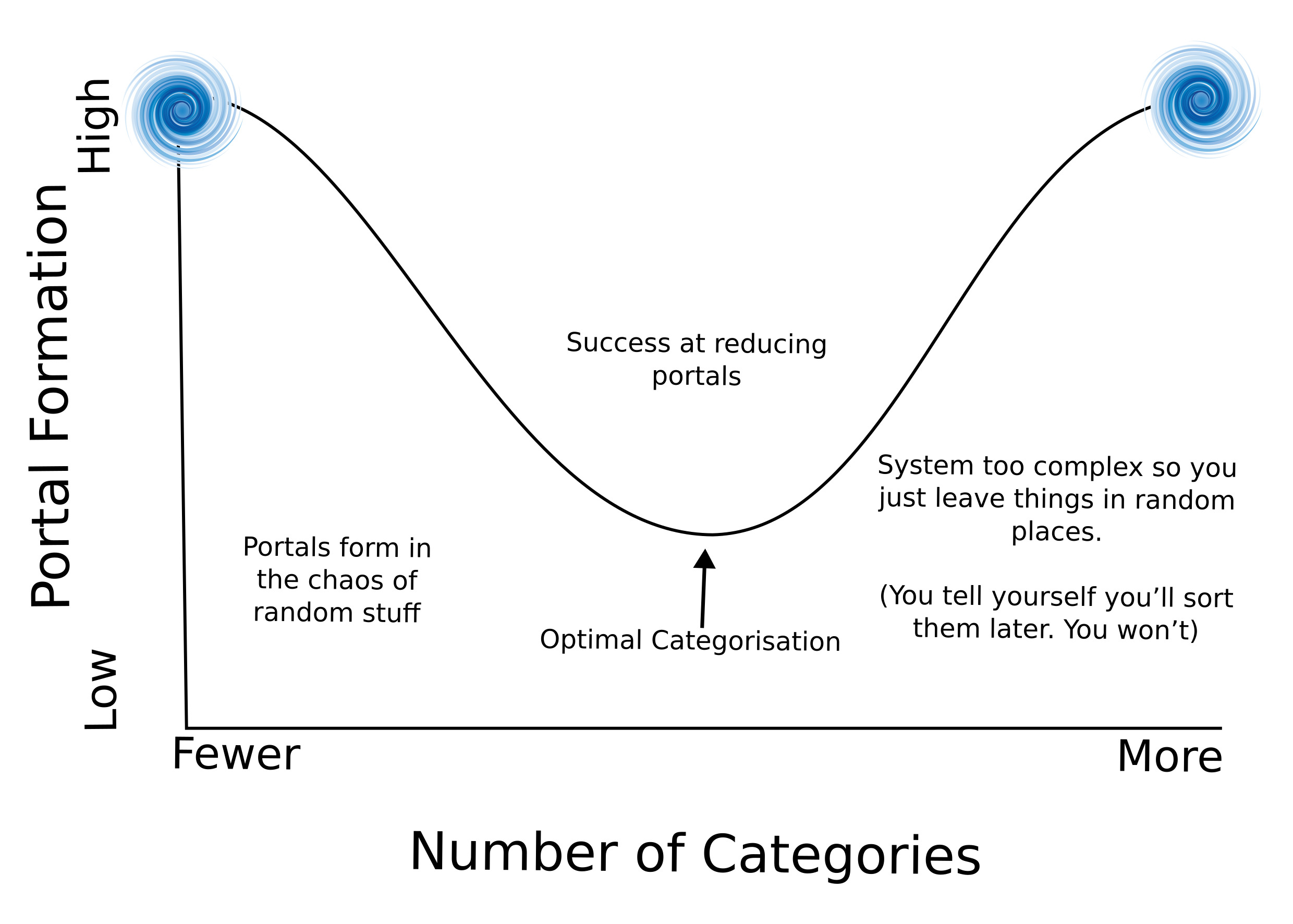
Do make systems to organise your things, but when you’re making them, think about how much effort it takes to maintain. Think about your track record with tidiness. Is it within you capacity to maintain this system. Not just on your best, most motivated, highest energy days, but also on your low energy, difficult days where it’s hard to achieve anything at all.
For guidance, things that take effort, that could lead to system failure:
- opening doors, cupboards, getting out boxes
- hanging things up
- sorting things into lots of categories
- travelling to a different room or a far side of the room
“Do it now” principle
If you notice or remember something you need to do, and you can complete it in the next 60 seconds, do it now!
spot the dishes on the table and think “those need to be washed”? Take them now and put them in the dishwasher or sink. You have now made life slightly easier for future you, and made your space slightly more useable.
Trip over your shoes that you left in the middle of the floor? Move them now to wherever they belong.
You won’t manage to do this every time of course. But keep it in mind and see if it helps you achieve things.
Specific Strategies
Strategy 1: Don’t Fight It!
Portal proofing should not be aspirational. Try not to think “yeah it’s a mess now, but if I just get myself together I could tidy it all up.” You are always going to be you, if you have never been able to keep your space clean and tidy before, that isn’t going to suddenly change now. Your space should work for you, you shouldn’t be working for your space. Portal proofing will look different for everyone based on their needs and capacity.
Here’s some ways to make your space a little easier to look after:
Put the mess container where the mess naturally occurs
If things keep ending up in the same wrong place, redefine what the right place is.
You have a laundry basket across the room from you, and a pile of dirty clothes at the foot of you bed because that’s where you kick them to when you take them off? Put the laundry basket at the foot of the bed. Or wherever it is that your dirty laundry accumulates.
Similarly, what do you do with your not-quite-dirty clothes? The clothes that you could wear again, but they aren’t clean enough to go back with your clean clothes. My room got a lot cleaner when I got a dedicated box for my not quite dirty clothes. If you want something more elaborate, someone has now invented a chair precisely for this purpose.
Doing a craft project or something that involves cutting up a lot of paper? Put a small bin where you are doing this. Or a bowl on the table to put the off cuts in.
Preparing veg? put the compost bin or a bowl next to the chopping board so that you can immediately dump the waste bits in there, or cut and peel directly into it depending on what the task is.
What do you do with all the stuff in your pockets when you walk in the house? Receipts, keys, spare change, etc. Sometimes this stuff ends up migrating all over the house, then later you’re trying to leave but you can’t find where you left the keys this time! Having a key bowl, or shelf, or whatever, near to the front door, to catch all the little things as you walk in can help you keep track of all of it.
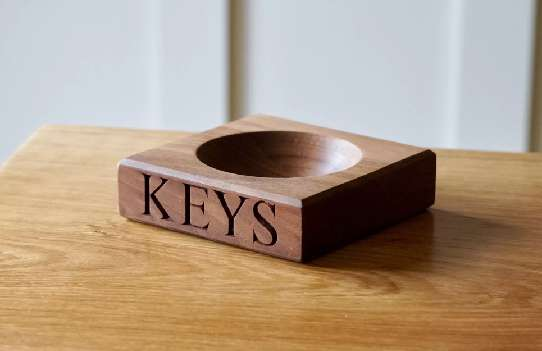
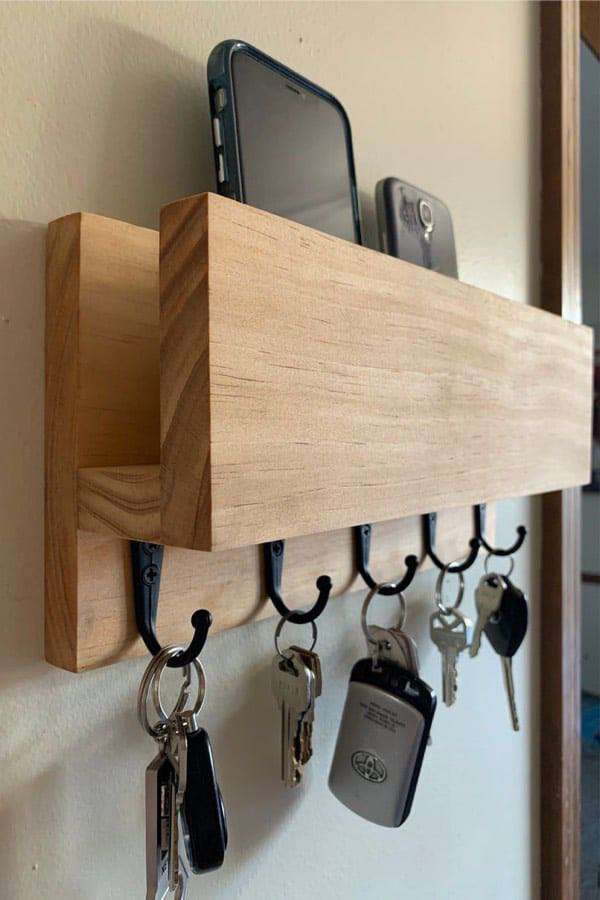
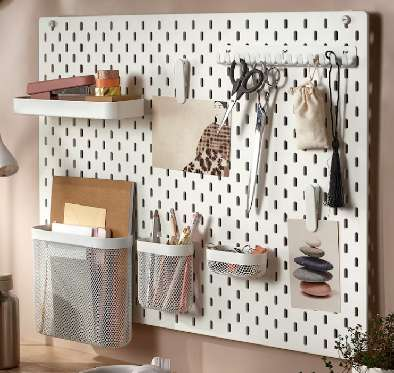
All of these strategies make it easier to deal with the mess. It reduces the tidying up step. Instead of gathering your clothes and putting them in the wash, you just throw them wherever you usually do and they are already contained ready for washing. Don’t feel like cleaning up after doing crafts or food prep? at least all the waste is contained because you cut directly into it, so it isn’t sprawling out all over your space. And whenever you do clean up its just a matter of tipping things from one container to another, not gathering lots of little bits from all over the place. Lower effort, lower energy, more maintainable.
Inboxes
A place to dump things that you can’t/don’t want to deal with right now. If you have a support worker, one of their tasks could be to help you go through your inboxes
Post – A shelf to put post on so that it doesn’t go missing before you have a chance to deal with it.
Washing – A box, near your bedroom (or wherever you get dressed) to put all clean laundry in, you can fold and sort it later, but at least now it isn’t taking up space in the dryer.
Make it easy
Are there any recurring challenges in your life that simply aren’t necessary? For example, would you be happy wearing all the same sock if it saves you from having to find all the matching pairs when you are sorting your laundry?
Strategy 2: Anchors
Some things are easy to portal, some things are harder to portal.
Things that are easy to portal:
- Phone
- Wallet
- Keys
- bags
- coats
Things that are harder (though, not impossible) to portal:
- Humans
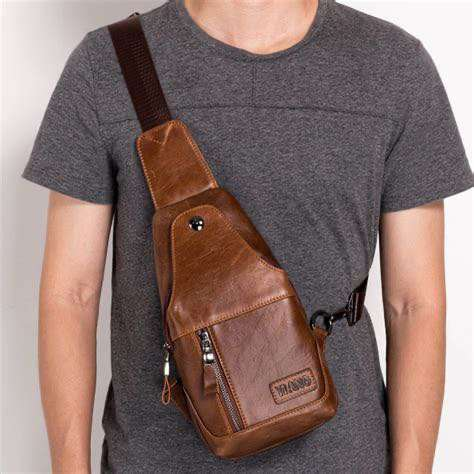
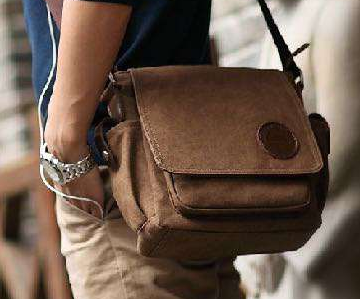
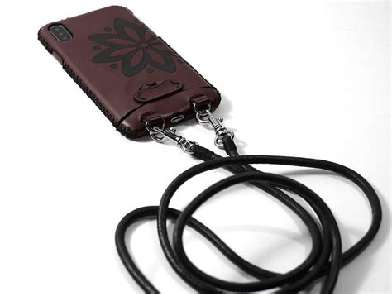
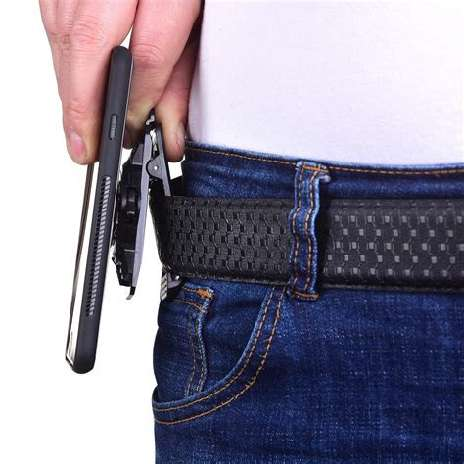
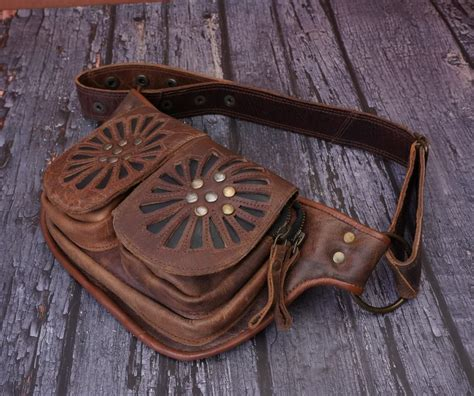
This is especially relevant when out and about. Portals can’t swallow up the easy things if they are attached to a thing that is hard to portal. This is why I opt for messenger bags and bumbags over backpacks. Backpacks come off whenever I sit down or if I want to access them. Messenger bags and bumbags stay attached to me basically the whole time I am out.
Anchored bags:

Anchored phones:
Anchored coat: (cloak)

I never take my cloak off when I am out and about, I just pull it around myself for warmth, and push it off my shoulders if it is too warm. It remains anchored at all times.
Bonus Strategy: If you can’t have something fully anchored, you can at least keep it as close to you as possible. For example, if I have a tote bag and I am on the bus, I will hook the tote bag over my knee rather than on the seat next to me. If it is not touching me, I could lose it, if it is still on me, I am less likely to forget it is there.
Strategy 3: Well Organised Portable Containers
First off,
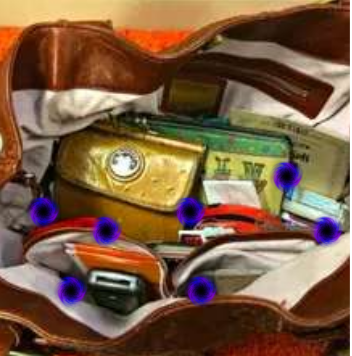
Things are more likely to get portalled if there are many unrelated items jumbled together. Or if items are separated from their container. Here is a bag that is likely to attract portals:
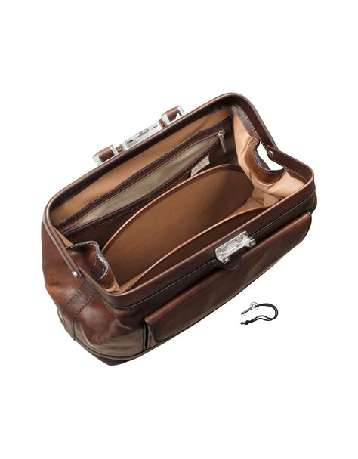
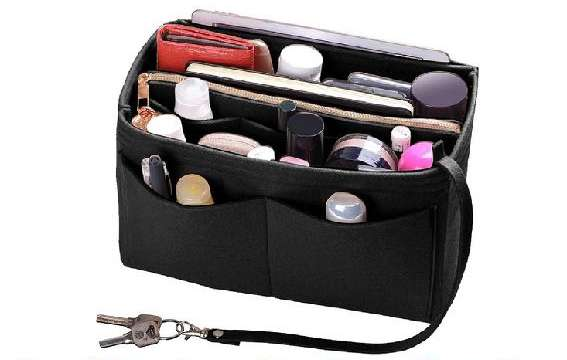
You can help this by using a bag organiser or having a bag with lots of useful pockets.
Strategy 4: Keep It In Sight
Portals develop out of sight and under things, so use visual storage when possible.
- Transparent containers
- Arrange things into a single layer
- Tiers so you can see the things at the back of a shelf
- Ways of accessing the stuff at the back (drawers, turntables, boxes)
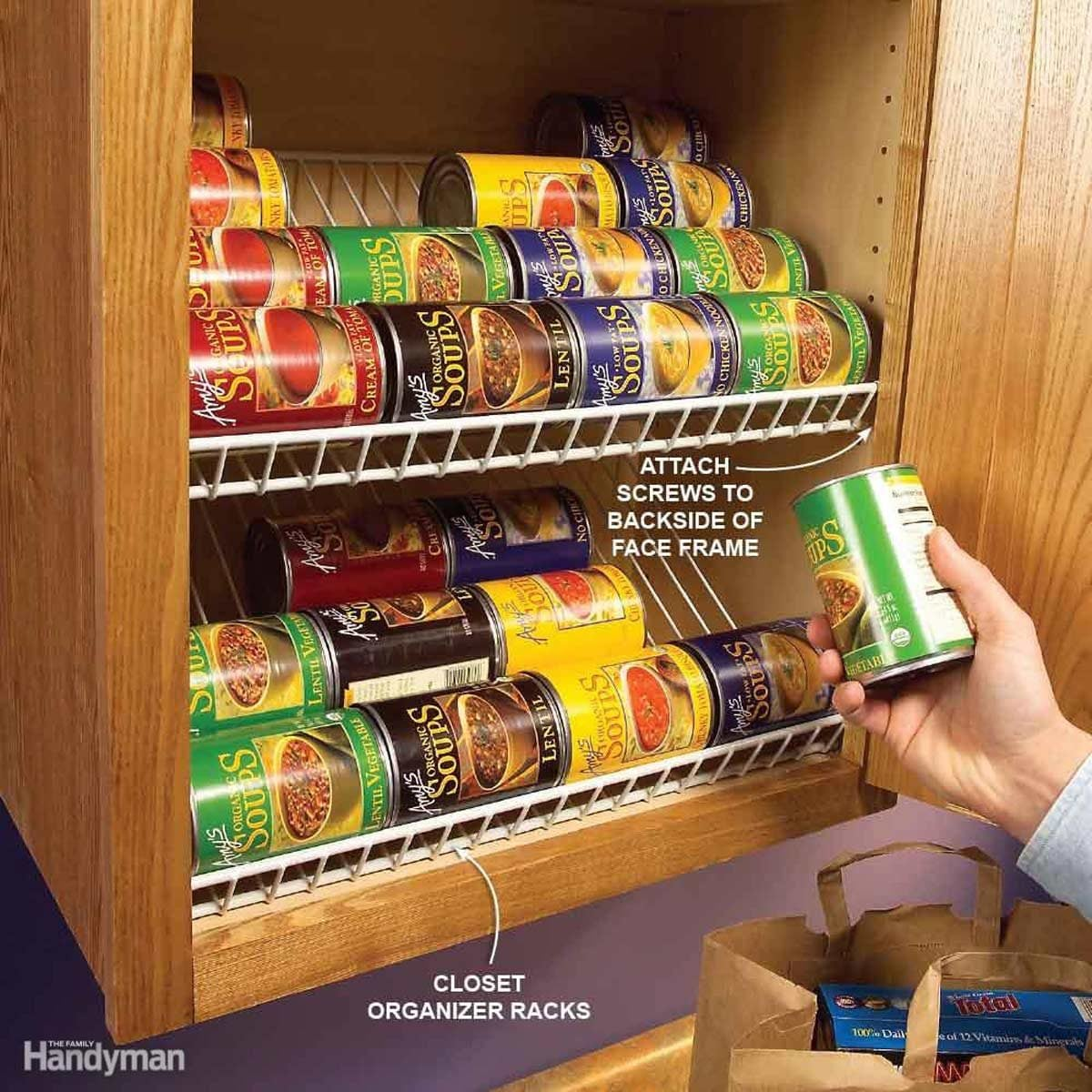
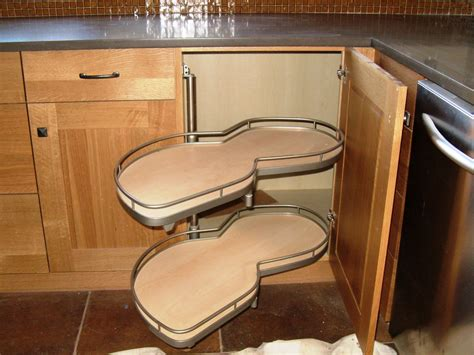
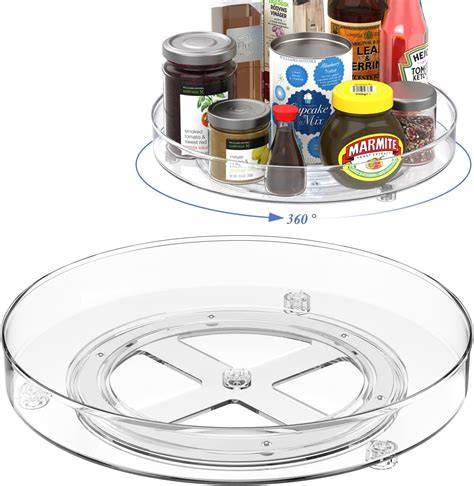
For a particularly budget option, I make inserts for my kitchen cupboards out of cardboard. Shoeboxes can often be good for this, but I also cut and reconstruct boxes to suit my exact purposes sometimes. Storing my things in boxes means that I can pull out the whole box and see all of my things, even the stuff at the back of the cupboard that I might otherwise forget exists.
Strategy 5: Multi-sensory
Another approach to keeping things in sight is to make things stand out. The TV remote got swallowed by portals quite regularly until we put it in this neon green case, and it never vanished again.
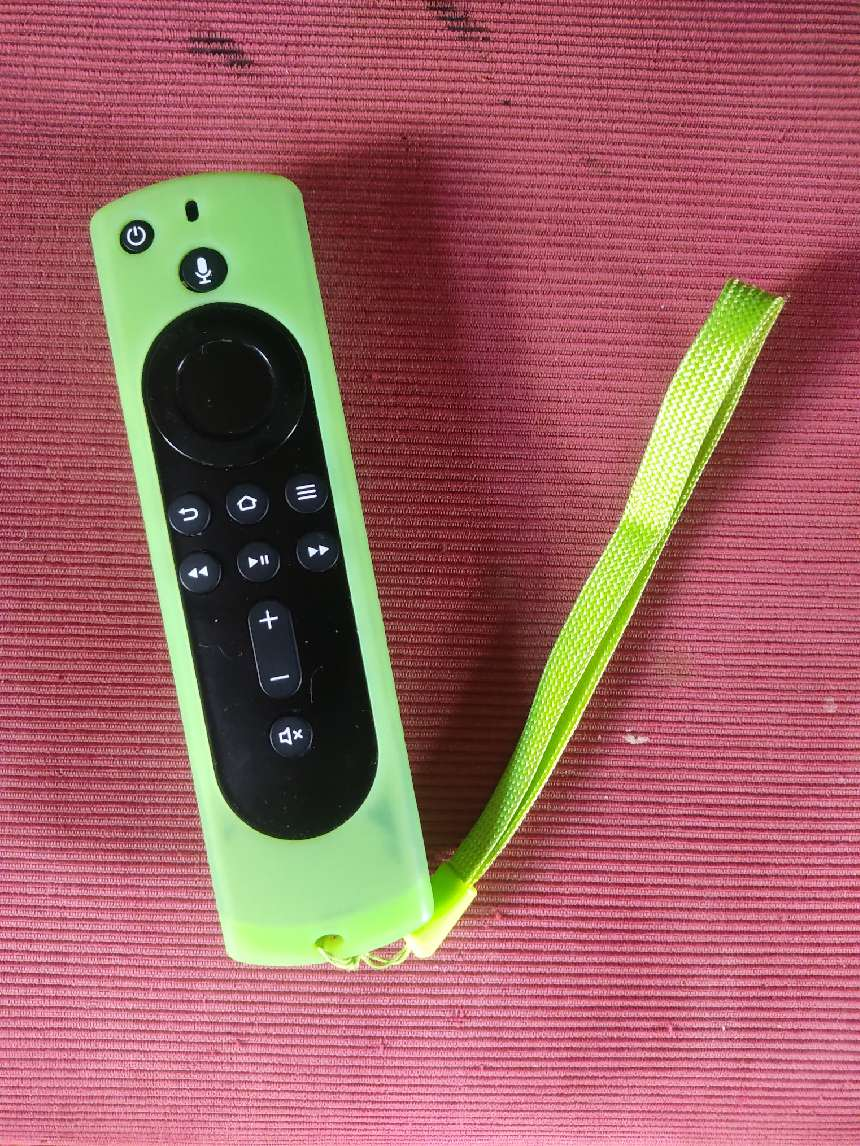
My mum also implements this strategy on toddlers. That’s right: quite frighteningly, entire toddlers can get portalled! To prevent this my mum dresses toddlers in bright colours and attaches bells to them. This makes them much less prone to being portalled.
Another aspect to the multi-sensory strategy is that when you are checking you have everything, don’t just check it off in your head, physically touch each item that you need to remember.
Strategy 6: Keep It Together!
Items that are used together, stay together. The further apart that you store things, the more you have to pick things up and travel with them and bring them to different places, portals love this kind of thing. In the kitchen, you can keep food items that are used together close to each other, like having everything needed for making a sandwich in the same cupboard, or everything needed to make a cup of tea in the same area of the counter.
Sometimes this can mean getting multiple of one item. Say you use scissors to open packaging in the kitchen, to do crafts at the dining table, and to open post in the living room. Have a pair of scissors in each of these locations so that each pair never travels far from where it belongs, and it is always easy to put pack in its place.
Another way to implement this strategy is that if you are taking something away from its home, take the whole set, so they stay together. Don’t take one tool out of the toolbox, take the whole tool box to where it is needed. This increases the likelihood that the tool returns to the box before there is a chance for it to get portalled.
Special Strategy: The Portal Proof Box
A portal proof box has specific properties that prevent portals from appearing inside
- It does not hold many items
- The items it holds are for a specific time or purpose
- It is distinctive (make it has fun patterns on it that make it stand out)
In my mums house it is used to hold special items that the kids need for school tomorrow (permission forms, swimming kits). You could similarly create a Portal Proof Box dedicated to something like “things I need to take when I leave the house tomorrow”
Examples
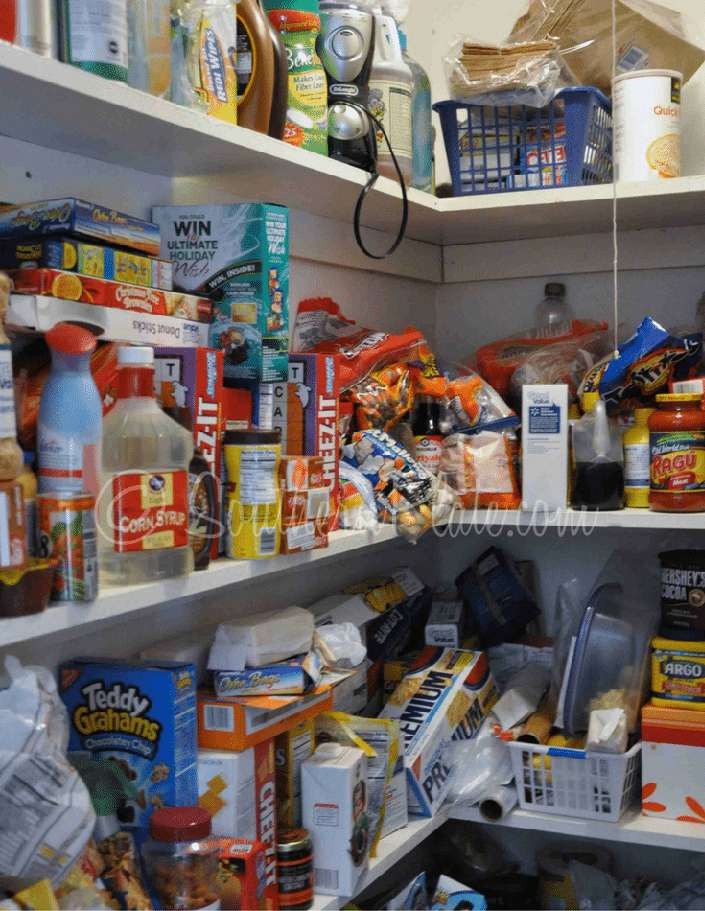
Here are some shelves that will attract all the portals:
Vs, here is a cupboard that has been portal-proofed:
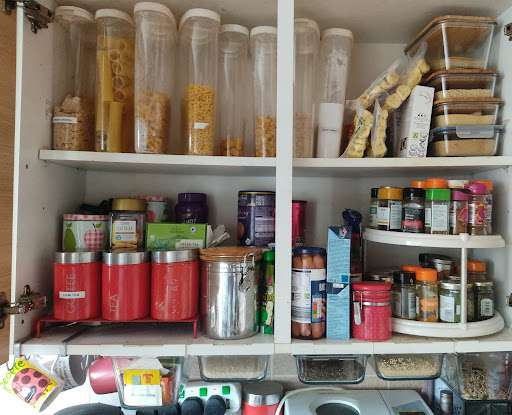
It has
- Visible Storage (transparent tubs, tiered shelves)
- Similar Items stored together
- Rotating shelf so that it is easy to access things stored at the back
Bonus, this area has been optimised for putting items that are used together close together:
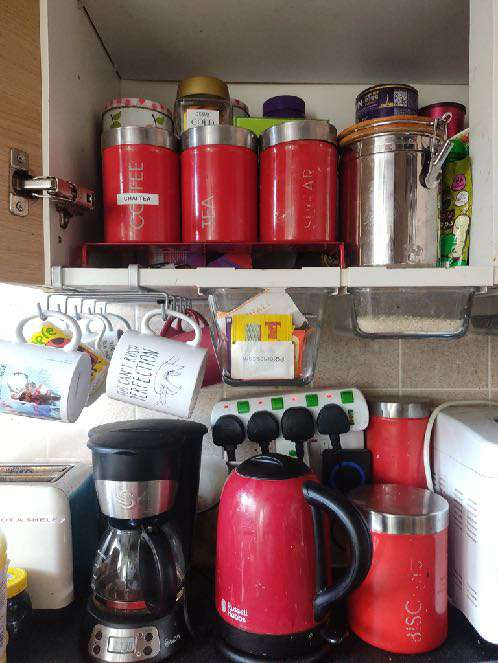
There is tea, coffee, hot chocolate, sugar on the shelf, with mugs stored underneath. And the coffee maker and kettle are on the counter below. And the biscuit tin beside. A person can make a whole hot drink just standing in one place and never moving, so there are minimal openings for portals to form
Summary
- Portals are a fun analogy for executive dysfunction
- Neurodivergent people are far more likely than NTs to lose things
- Rather than trying to just stop having this difficulty by willpower or wishful thinking, make things easier for yourself. You can adopt strategies to reduce losses, e.g.
- Put containers in the places you tend to put things down
- Attach easily lost items to ones that are less likely to be lost (e.g. a human)
- Keep everything you need to take out in a single transferable container
- Make things visible (or audible)
- Store things that are used together close to each other
Leave a Reply